


Nearly every culture has developed its own ways of cleansing the body and the mind. These were not merely hygienic practices, but deeply ritualistic experiences that also strengthened community bonds.
One of these is the temazcal – a traditional Mesoamerican Indigenous steam bath whose roots reach back long before the Spanish conquest.
The word temazcal comes from the Nahuatl language (temāzcalli) and means “house of steam” or “house of heat.”
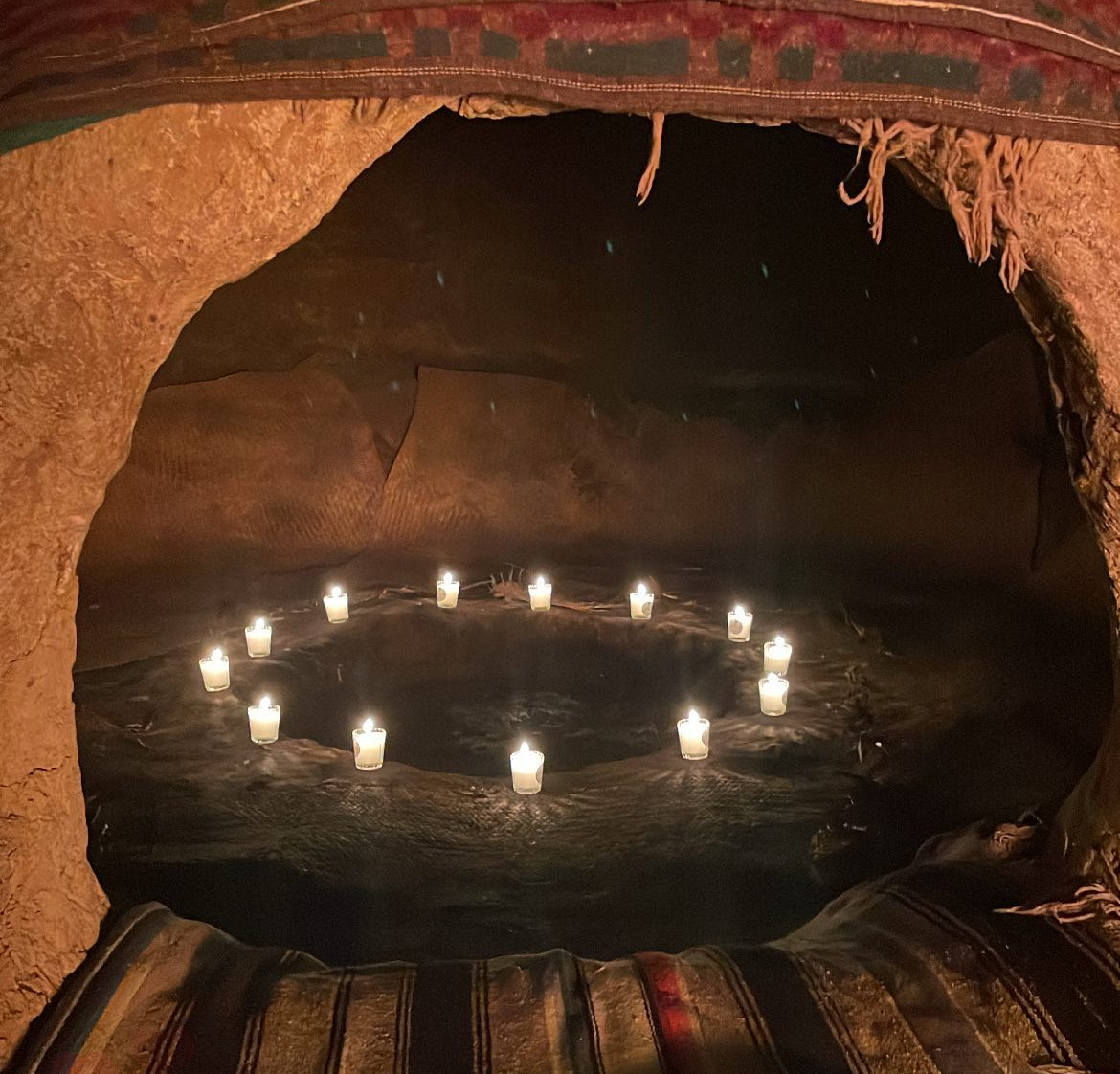
A temazcal is usually a small, round or dome-shaped structure with a low entrance. To enter, one must bend down — this is not only practical, but also symbolic, representing humility and readiness for the ritual.
Inside, it is not possible to stand upright, and the space is often dim or dark, encouraging inward focus and withdrawal from the outside world. The interior of the temazcal is often compared to a mother’s womb — a warm, dark, and protective space from which a person emerges as if reborn. This symbolism is one reason the experience can be deeply emotional and introspective.
The stones are heated outside the temazcal in a separate fire and then brought inside, where water or herbal infusions are poured over them to create hot steam.
For Indigenous peoples, the temazcal was not merely a sauna. It was used for:
The temazcal can be seen as a kind of communal healing space, where physical heat, steam, and rhythmic activity supported the body’s natural capacity to restore itself.
In many traditions, a temazcal is guided by an experienced ritual leader (a temazcalero). The ceremony may include:
It is important to understand that the way temazcal ceremonies are conducted varies by region. There is no single universal set of rules — the details depend on the specific culture, community, and historical context.
Today, temazcal ceremonies are still practiced in Mexico and around the world, but it is important to distinguish between:
Both can offer meaningful experiences, but their depth and significance may differ.
Temazcal is not merely an exotic sauna experience. It is a ritual practice thousands of years old, weaving together body, spirit, community, and nature.
It is best approached with respect and awareness — not as a “detox,” but as a space for restoration and presence.
Photo: https://www.tashdoherty.com/

