


Estonians know very well what a sauna is — a place to cleanse both body and mind, to throw water on the hot stones, and to sweat away the worries of the day. For most of us, the sauna is an essential part of home life, and even modern apartment buildings are often designed to include a small electric sauna in the bathroom.
But what about other countries? Do people outside Estonia, Finland, and Russia also share a love for sauna traditions?
This time, we’re taking a little journey to the East to explore the world of the Turkish hammam — a place where sauna is not just for washing, but a living piece of centuries-old culture.
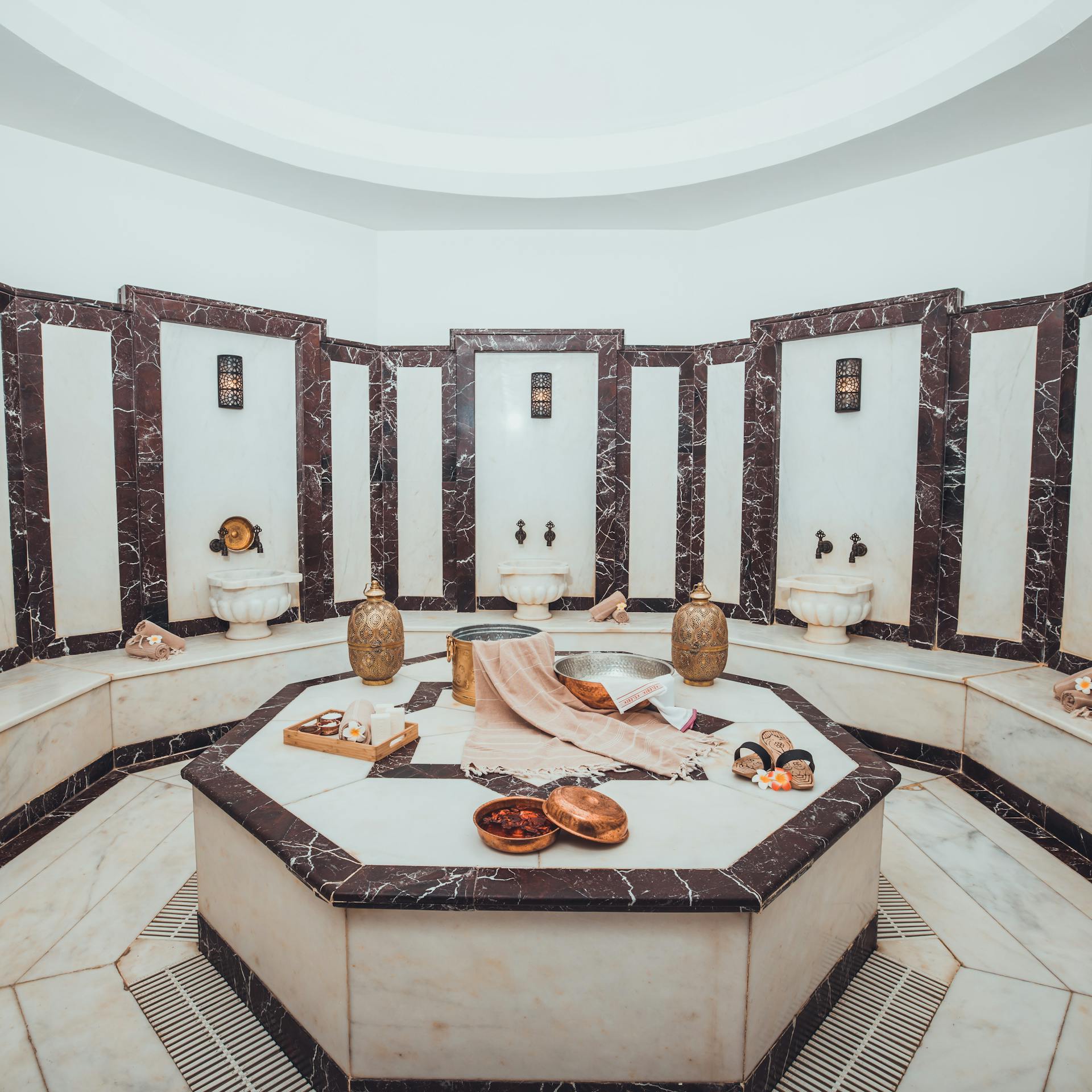
The Turkish bath, or hammam, is much more than an ordinary steam room. Historically, it was a social hub — a place where townspeople gathered to exchange news, relax with friends, and enjoy some quiet time. It was also a common venue for business meetings and important discussions.
In a traditional hammam, the air was heated by a large cauldron of water placed beneath the floor. As the water boiled, steam escaped through small wall openings and filled the room with warm, moist air.
Turkish baths have always been known for their luxurious interiors. The walls and floors are typically covered with cooling marble, a stone believed since ancient times to have antibacterial and calming properties. With 100% humidity, marble is one of the few materials that can withstand the environment of a hammam.
Traditionally, men and women visited the hammam at different times.
For Turkish women, a trip to the hammam was a special ritual and a vital part of social life — a place to discuss important matters, share news, and simply chat. It was also the setting for celebrating major life events, such as the birth of a child or meeting a matchmaker. Women often spent the whole day in the hammam, enjoying coffee, fresh fruit, and traditional dishes.
Men, on the other hand, used the hammam for relaxation, conversations with friends, business meetings — and, of course, washing.
What makes the hammam unique is its very high humidity (100%) combined with a mild temperature (35–55 °C). This creates a gentle and relaxing environment suitable for almost everyone.
For comparison:
Not every body can handle such intense heat, which makes the hammam’s mild warmth a perfect alternative. It allows you to relax deeply without the risk of overheating.
The hammam is like a natural spa, offering both physical and emotional restoration:
The Turkish hammam is not just a sauna — it’s a ritual, an experience, and a source of well-being. It’s a place where time slows down, thoughts settle, and the body thanks you for the care.
If you’re used to the fiery heat of an Estonian sauna, the hammam’s gentle warmth might seem modest at first — but that’s exactly where its magic lies: a calm, deep cleansing that soothes both body and soul.

